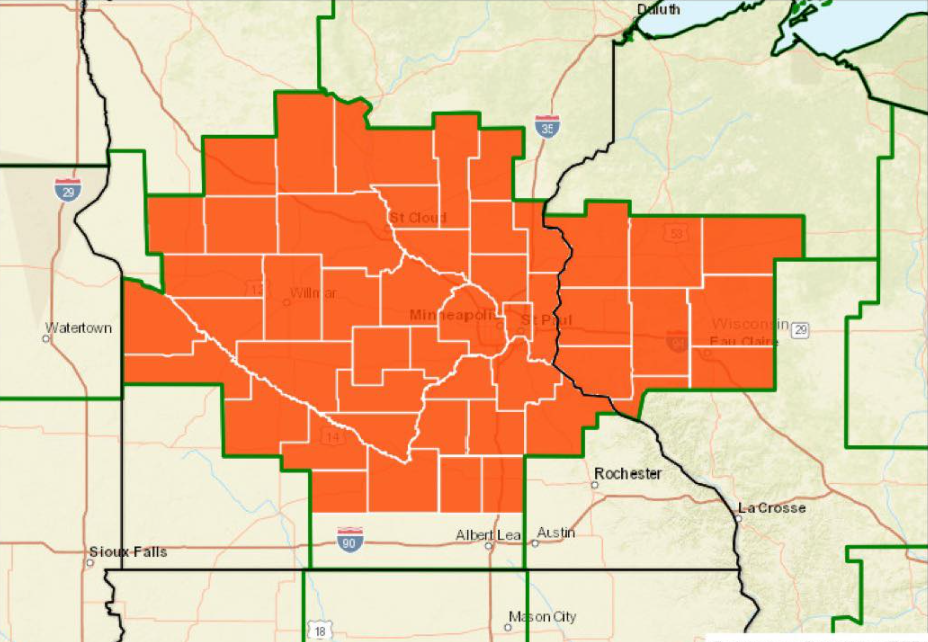
Ever wonder why school is closed? Or maybe wonder who makes those decisions? The first thought might be the principal or the school board, but that is not the case. Recently, Cambridge-Isanti superintendent Dr. Nate Ruldoph was interviewed about who makes decisions on closing school and whether there is a process before making a final decision on E-learning, closing, or having a school day. He has extensive experience in his field, having served as a superintendent for seven years, as well as being a former principal and teacher. His role today leads us to ask who really decides to close schools.
From what he has shared, superintendents across school districts go through a detailed decision-making process when a storm is approaching. Knowing that a storm is coming leads to an immediate investigation. This begins with continuous monitoring, which is the first step in the process. This step involves tracking the weather and forecasts at all times throughout the day.
The second step involves collaborating with experts, such as participating in webinars hosted by the National Weather Service. These statewide webinars provide important information about the storm, including expected temperatures, road conditions, and other developing factors. This step is important because the superintendent reviews this information ahead of time to track the weather and gather all data in one place in order to prepare effectively.
The third part of the process is called internal coordination. During this step, the transportation department, community education department, buildings and grounds department, activities and athletics department, and district leaders come together as a group known as the CI-Weather team. They provide insight and input on the decision-making process. They take students’ needs seriously, including sports, activities, and especially those who rely on buses. This information is crucial, and the superintendent must carefully listen to each perspective. Each team member has a specific role, such as determining bus routes, checking facility conditions, assessing road safety, and preparing for snow removal. The team members evaluate the situation from their own perspectives and share information with one another.
The fourth step is consultation with transportation authorities. This allows communication with local transportation departments to better understand snowplowing plans and assess road safety. They connect with those responsible for snowplowing in Isanti County. This information helps determine whether plows will reach gravel roads or county roads in time, and whether township plows will be available. Without this information, there are areas that may not be safely accessible. They may also work with other transportation specialists across the region and sometimes check the state patrol website for updates.
The fifth step is early morning assessment. The weather team wakes up around 3:00 am to 3:30 am to evaluate current conditions. This helps them make decisions early and prevent buses from going out in unsafe conditions.
The sixth step involves input from bus drivers. Some drivers act like scouts by conducting test drives around 4:00 am. They provide valuable information about road conditions across the district and report back to the superintendent and the team.
The seventh step is communication with other districts. They stay in contact with nearby schools to understand their assessments and share input. While different districts may have different perspectives, they aim to stay informed and aligned when possible. However, these conversations are used as data points and not as the final deciding factor. The decision-making process can take up to five days or as little as an hour, depending on how much time is available to prepare. Sometimes decisions are made the night before, while other times they are made early in the morning. Most decisions are finalized by 5:00 am.
With all of this information considered, the superintendent, along with input from the team, makes the final decision on whether to implement a two hour delay, close schools, or move to E-learning. Each option has its pros and cons. A two hour delay allows students to still participate in learning while giving road conditions time to improve.
However, this can create challenges for families, especially those with young children. Parents may need to get to work while their children still need supervision. This creates a difficult situation when buses are delayed. In these cases, families are allowed to keep their children home with an excused absence due to weather.
If school is closed, the day does not count as a school day. According to the State of Minnesota, schools must meet a required number of days. The district is allowed one closure that does not count against them, but after that, if they run out of E-learning days, they must make up the missed day by adjusting the calendar. This often means turning a non student day into a student day.
E-learning days do count as school days. Each year, the district is given five E-learning days, and they must be used carefully. If too many are used early in the year, the district may face difficult decisions later. In some cases, missed days may need to be made up at the end of the school year, even after graduation, which can make scheduling more complicated.
When it comes to concerns from the community, there are many different perspectives. Some families rely on school for meals, warmth, and structure. As the superintendent stated, “School is where we get our meals, school is where we are warm, school provides a lot of things for us.” This highlights the important role schools play in supporting students and families.
At the same time, some parents are concerned about safety, especially for student drivers and road conditions. The district strongly supports parents who choose to keep their children home due to weather concerns. The administration listens to feedback from the community and takes these concerns seriously. School funding can also be affected, as it helps cover daily expenses such as transportation, staff, supplies, and technology.
In conclusion, you now have a better understanding of how the decision-making process works when it comes to weather-related school closures. It also shows the amount of time, effort, and care the district and staff put into making decisions that prioritize both safety and education.